Metabolic Partitioning & Targeted Lipolysis Stack
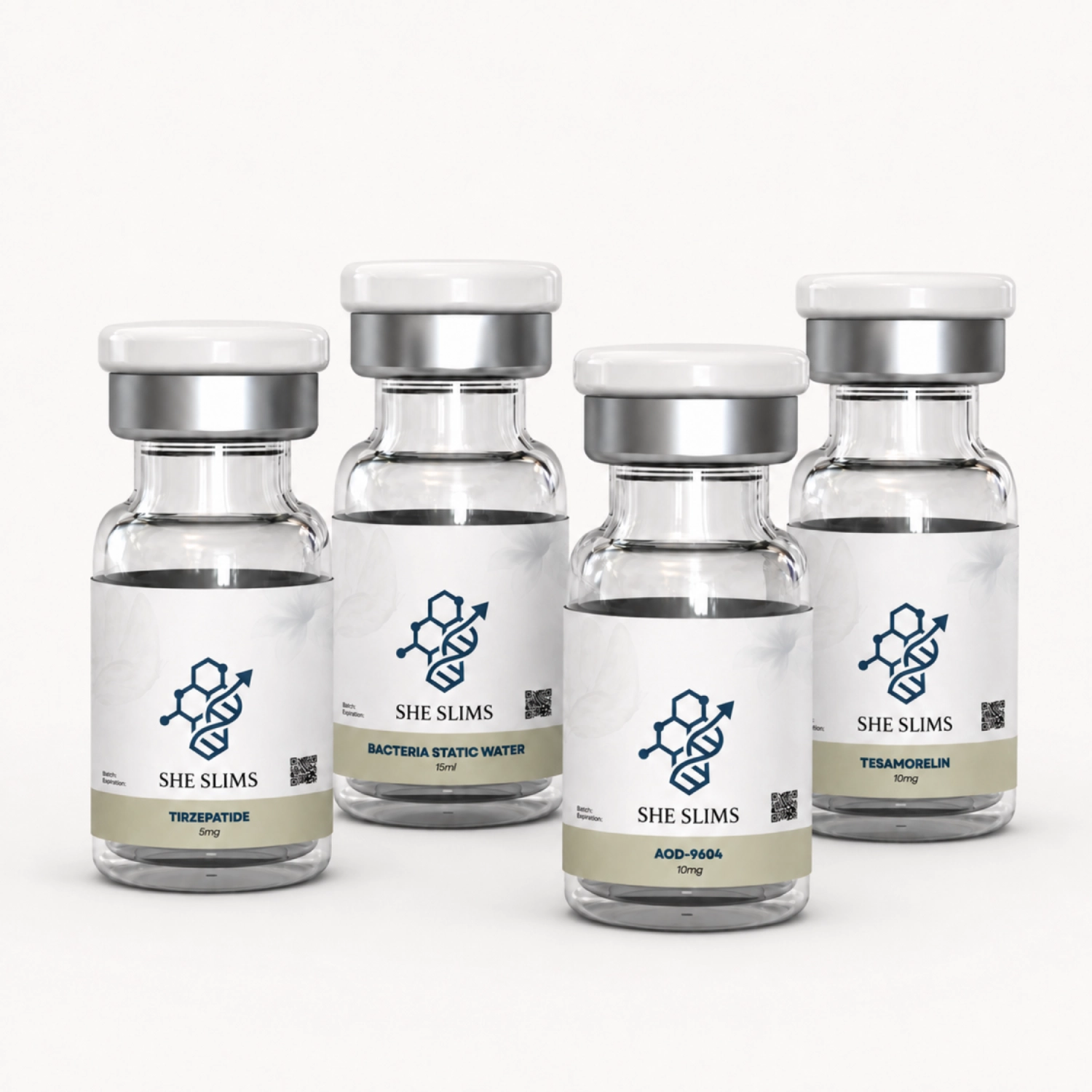
1 Bac Water | 4 5mg Tirzepatide | 2 5mg AOD-9604 | 1 10mg Tesamorelin
The Metabolic Partitioning & Targeted Lipolysis Stack combines three synergistic peptides engineered to optimize metabolic efficiency, accelerate targeted fat oxidation, and preserve lean tissue mass. By integrating a dual incretin receptor agonist, a targeted lipolytic growth hormone fragment, and a potent growth hormone-releasing hormone (GHRH) analog, this protocol establishes a comprehensive framework for research into body composition remodeling, glycemic control, and visceral adipose tissue reduction.
Mechanism Of Action
Dual Incretin Receptor Agonism (GIP/GLP-1): Tirzepatide selectively co-activates both glucose-dependent insulinotropic polypeptide (GIP) and glucagon-like peptide-1 (GLP-1) receptors. This dual signaling enhances glucose-dependent insulin secretion, slows gastric emptying, improves lipid clearance, and acts centrally in the hypothalamus to modulate satiety and energy intake.
Targeted Adipocyte Lipolysis: AOD-9604 (modified hGH 177-191 fragment) stimulates lipolysis (fat breakdown) and inhibits lipogenesis (fat accumulation) by upregulating beta-3 adrenergic pathway activity. It isolates the fat-burning domain of human growth hormone without altering circulating IGF-1, inducing cellular proliferation, or negatively impacting insulin sensitivity.
Selective Visceral Fat Mobilization & Somatotropic Stimulation: Tesamorelin functions as a stabilized GHRH analog that binds to pituitary somatotrophs to stimulate natural, pulsatile growth hormone release. This physiological GH elevation specifically targets deep, inflammatory visceral adipose tissue (VAT) and promotes systemic lipid clearance.
Potential Benefits
Multi-Pathway Adipose Tissue Reduction: Combines central appetite modulation and metabolic stabilization (Tirzepatide) with direct peripheral fat oxidation (AOD-9604) and somatotropic visceral fat mobilization (Tesamorelin), tackling both visceral and subcutaneous fat depots from distinct angles.
Preservation of Lean Mass During Caloric Deficits: Counteracts the muscle and connective tissue wasting often observed with rapid weight loss by leveraging Tesamorelin’s endogenous growth hormone release to support nitrogen retention, protein synthesis, and cellular repair.
Comprehensive Glycemic and Lipid Optimization: Enhances whole-body insulin sensitivity, reduces ectopic liver fat accumulation, and supports favorable lipid profiles via coordinated incretin and endocrine receptor cascades.
Research Studies
Incretin Co-Agonism and Metabolic Dynamics: Major clinical evaluations of dual GIP/GLP-1 receptor agonism demonstrate substantial, dose-dependent reductions in total adipose mass, marked improvements in glycemic markers, and favorable shifts in cardiovascular risk profiles.
GHRH Specificity and Visceral Fat Reduction: Controlled clinical trials examining Tesamorelin have established its selective efficacy in decreasing visceral fat and preserving lean mass, while preclinical studies on AOD-9604 confirm targeted lipolytic action devoid of hyperglycemic side effects.
Conclusion
The combination of Tirzepatide, AOD-9604, and Tesamorelin provides a sophisticated, multi-target platform for investigating metabolic regulation, selective lipolysis, and lean mass preservation. By unifying central energetic signaling with peripheral fat mobilization and endogenous pituitary stimulation, this stack presents an advanced model for metabolic and body composition research. Further research is warranted to assess long-term metabolic adaptations and synergistic dosing kinetics.
Disclaimer
The information provided is intended solely for research and educational purposes. It is not meant as medical advice, nor should it be used for diagnosis, treatment, prevention, or cure of any disease or health condition. These are research chemicals and are not approved for human use by the FDA or any other regulatory body. Their safety and efficacy for human use have not been established. Users are advised to conduct thorough research and consult with qualified healthcare professionals before considering their use. All experimentation should be conducted in accordance with relevant laws, regulations, and ethical guidelines.