Your cart is empty
You may check out all the available products and buy some in the shop
Return to shop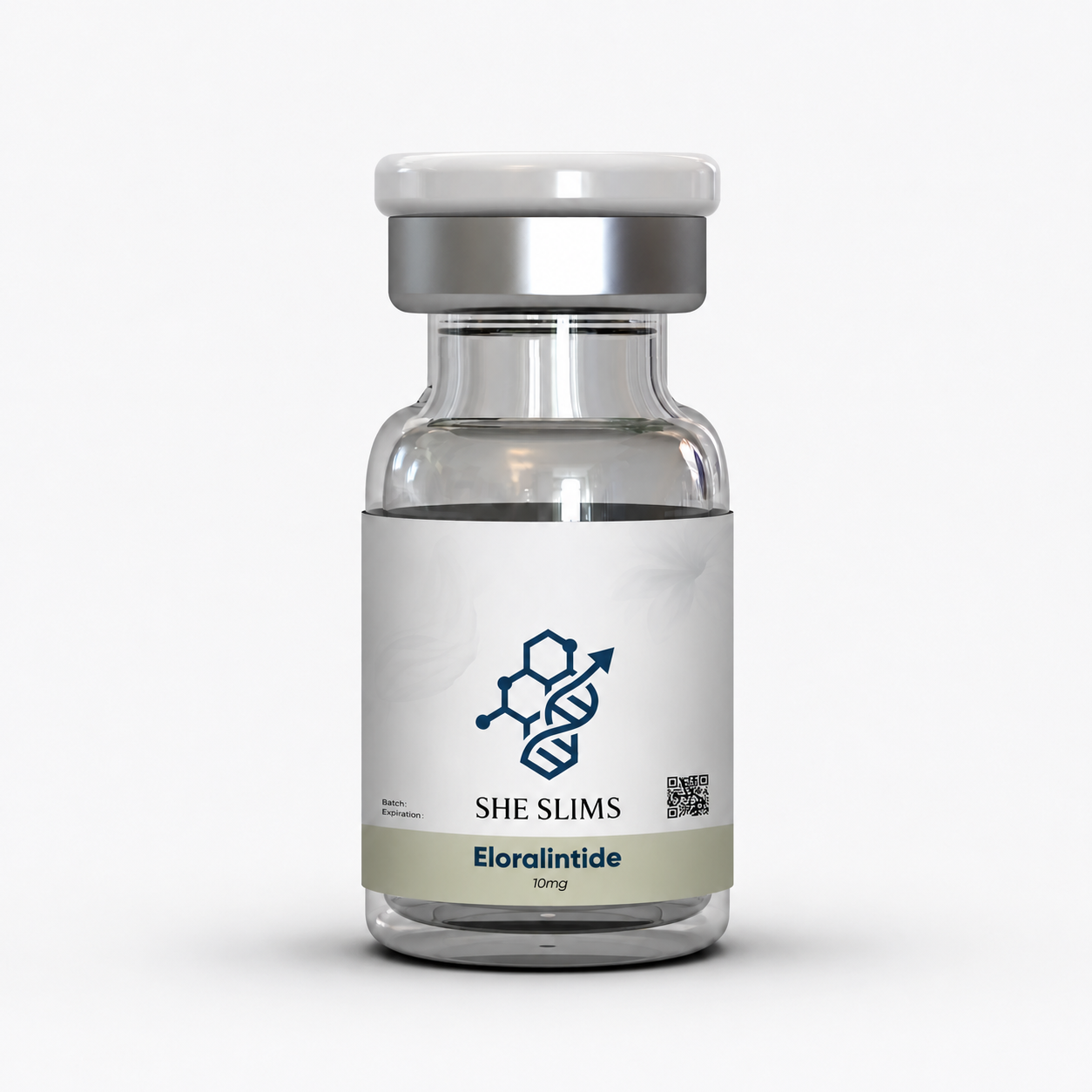
In Stock
Original price was: $179.99.$149.99Current price is: $149.99.17% OFF
Eloralintide 10mg (also known as LY3841136) is an investigational, long-acting peptide designed to selectively activate the amylin-1 receptor (AMY1R), a pathway involved in appetite regulation and feelings of fullness. Unlike familiar GLP-1 medications such as semaglutide (Wegovy/Ozempic), or the dual GIP/GLP-1 medication tirzepatide (Zepbound/Mounjaro), Eloralintide acts primarily through the amylin pathway. This distinct mechanism has made it an important focus of emerging obesity and metabolic research. In a 48-week, placebo-controlled Phase 2 trial involving 263 adults without type 2 diabetes, studied Eloralintide treatment groups achieved average weight reductions of approximately 9.5% to 20.1%, compared with 0.4% with placebo. These are investigational clinical findings, not established benefits of this 10mg research product.
In a separate 48-week Phase 2b trial, researchers evaluated combinations including:
Eloralintide 3mg + tirzepatide 5mg
Eloralintide 6mg + tirzepatide 5mg
Eloralintide 6mg + tirzepatide 10mg
Eloralintide 9mg + tirzepatide 15mg
Participants started at lower study doses and escalated under clinical supervision. The highest-dose combination produced approximately 23.3% average weight loss, compared with 14.8% for tirzepatide 15mg alone in that study.
Eloralintide represents a promising new direction in metabolic research because it targets the amylin pathway rather than relying solely on GLP-1 or GIP/GLP-1 receptor activity. Its Phase 2 weight-loss findings and early combination studies with tirzepatide highlight why researchers are interested in this distinct approach. However, Eloralintide has not been established as safer, more effective, or better tolerated than approved GLP-1 medicines in a direct comparative monotherapy trial. Nausea, other gastrointestinal symptoms, and fatigue occurred in clinical studies, and more data are needed to clarify long-term safety and effectiveness. Findings from regulated clinical trials cannot be assumed to apply to an independently supplied research vial.
Disclaimer: The information provided is intended solely for research and educational purposes. It is not medical advice and is not intended for the diagnosis, treatment, prevention, or cure of any disease or health condition. Eloralintide is investigational and is not FDA-approved for human use. This product is intended strictly for laboratory research and is not for human or animal administration. Its safety, purity, identity, and efficacy as supplied have not been established by the clinical trials discussed above. The stated 10mg describes the labeled product quantity and does not represent a studied or recommended dose. All research must comply with applicable laws, regulations, and ethical guidelines.